Fat metabolism · body weight · growth factors
AOD9604 has measurable metabolic signals, with limits in human trials
The strongest laboratory findings concern how fat is released and used for energy. The human weight-loss program produced an early signal, followed by a larger trial that did not establish a benefit over placebo.
Less weight gained
Treated animals gained less weight, and their fat tissue showed greater fat-breakdown activity. [1]
An early weight-loss signal
The 1 mg group favored AOD9604 numerically; the primary comparison was not statistically significant. [2]
No significant IGF-1 increase
IGF-1 measurements did not differ significantly from placebo. That is a hormone finding, not proof of muscle gain or overall safety. [3]
The original animal result
Treated rats gained 15.8 g; controls gained 35.6 g
The experiment used obese Zucker rats given oral AOD9604 at 500 micrograms/kg/day. Both groups gained weight. The finding was a smaller gain with treatment, not a loss of half the animals’ body weight. [1]
A separate 14-day mouse experiment using implanted infusion pumps found greater fat oxidation and increased blood glycerol, a marker of fat breakdown. Its cell experiments also distinguished AOD9604 from intact growth hormone: AOD9604 did not compete for the GH receptor or stimulate cell proliferation through it. [4]
These findings explain the interest in AOD9604 as a fat-metabolism peptide. They cannot supply a calorie-burning figure, a clothing-size change or a predicted percentage of human body-fat loss.
The larger human test
24 weeks did not establish an advantage over placebo
The OPTIONS study randomized 502 adults to oral AOD9604 or placebo alongside a diet-and-exercise program. The treatment groups did not achieve a statistically significant weight-loss advantage at either 12 or 24 weeks. Development for obesity was then stopped. [5], [6]
This is the central limitation behind human fat-loss claims. A promising laboratory mechanism and an earlier numerical result did not translate into a confirmed benefit in the larger trial. The before-and-after page shows the early measurements, their statistical context and the later study’s time points.
Those trials used capsules or tablets. They do not establish how much weight a person would lose with a subcutaneous vial or pen, or with a nasal spray. FDA’s review did not identify human effectiveness data for subcutaneous AOD9604. [6]
Body composition and everyday benefits
Fat metabolism is different from appetite control or muscle growth
| Goal | What the findings support |
|---|---|
| Lower body fat | Animal fat-metabolism effects support the research rationale. They do not establish a human body-fat percentage reduction. |
| A smaller waist | Overall body-weight change cannot specify where fat was lost. It does not prove targeted loss from the abdomen or an injection site. |
| Less hunger | The metabolic experiments do not establish a clinically useful reduction in appetite or food intake in people. |
| More muscle or workout energy | Absence of an IGF-1 rise is not an anabolic result. The cited studies do not supply a measured muscle-gain, strength or daily-energy benefit. |
These distinctions follow the outcomes actually measured in the original studies and FDA’s clinical assessment. [3], [4], [6]
A separate research direction
Cartilage findings came from injections into rabbit knee joints
32 rabbits, four treatment groups
In an induced knee-osteoarthritis model, AOD9604 improved cartilage-assessment scores versus saline. AOD9604 combined with hyaluronic acid performed better than either alone; assessment occurred eight weeks after the model was induced. [7]
Human joint recovery remains a separate question
A microscopic cartilage finding in a rabbit knee does not give a pain-relief percentage or a return-to-training date for a person. It also does not test the supplied subcutaneous or nasal formats.
Package facts
Compare total content and concentration before comparing price
| Format | Listed contents | Useful distinction |
|---|---|---|
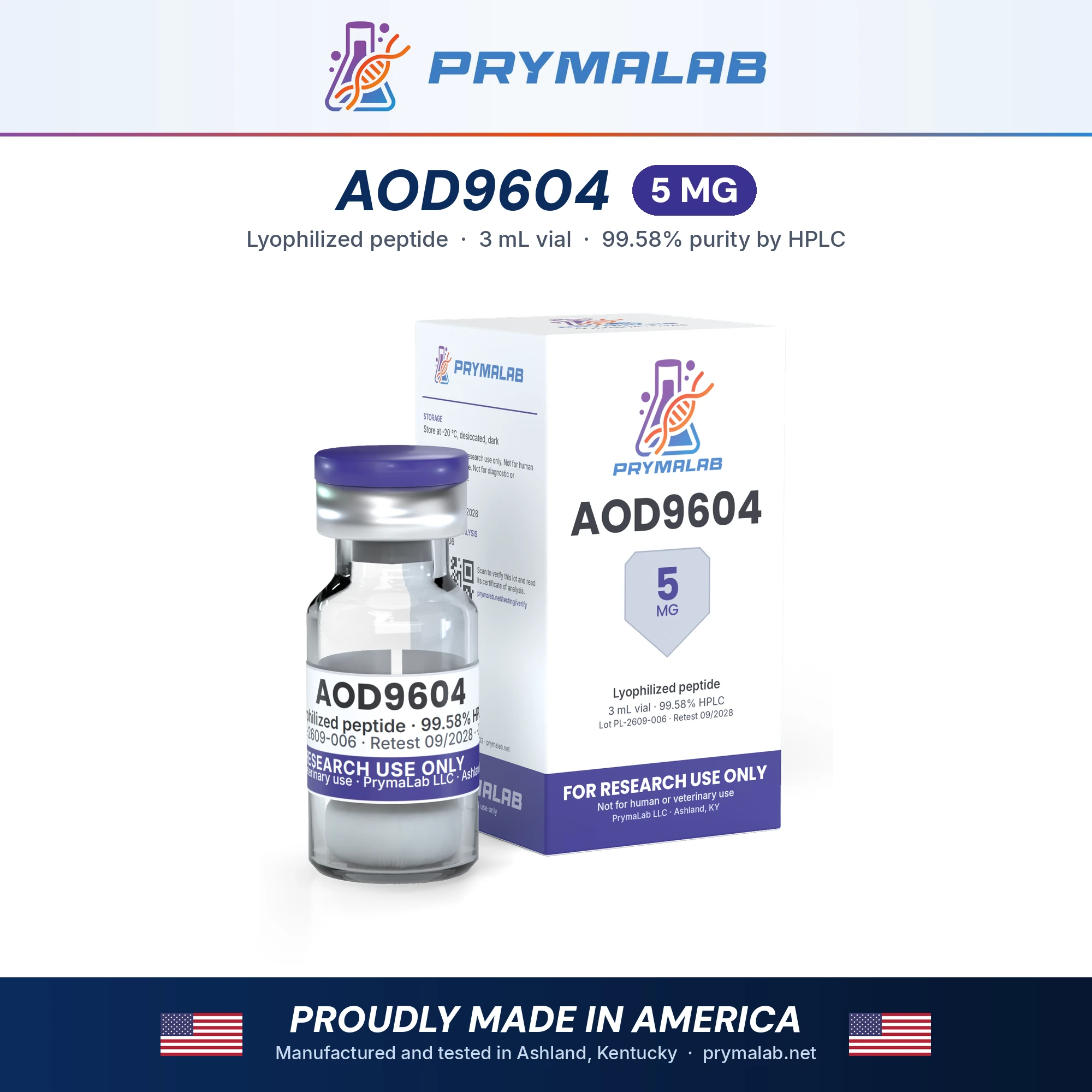
| Powder vial | 5 mg total | Powder has no liquid concentration until a volume is specified. |
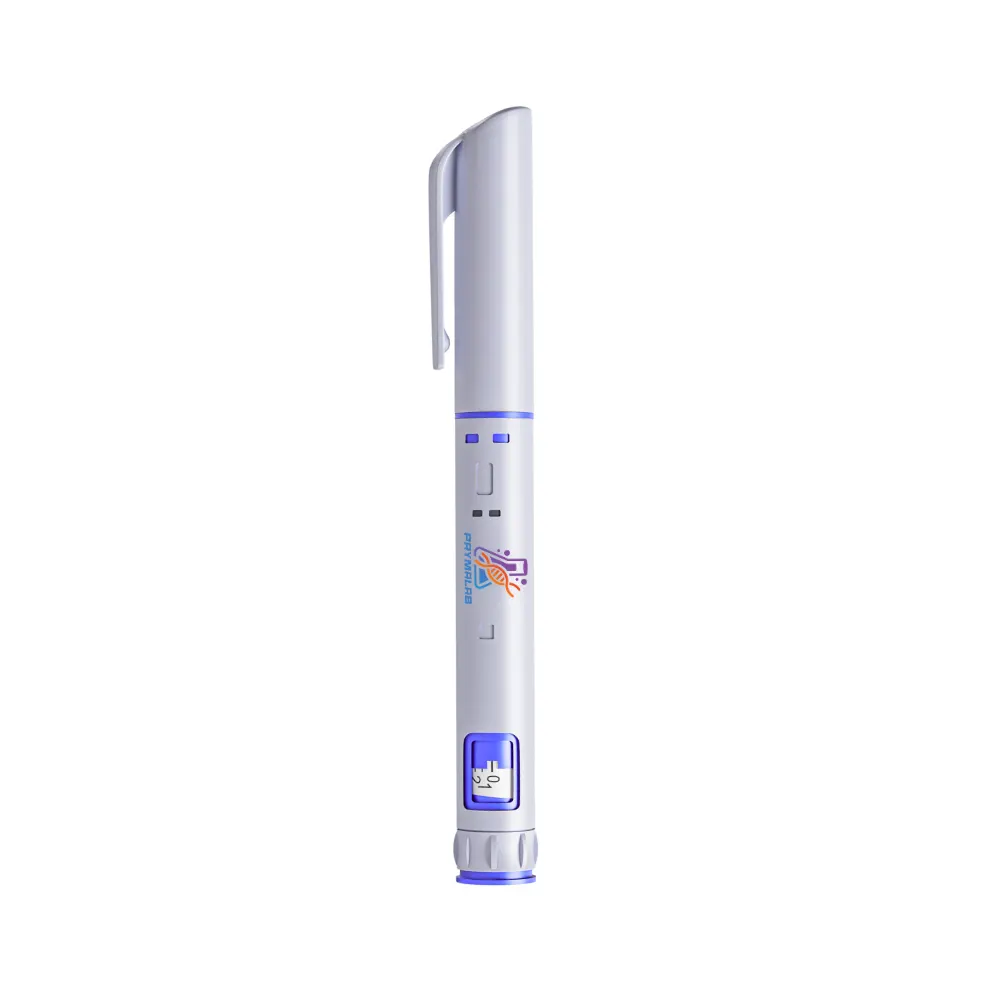
| Prefilled pen | 6 mg in 3 mL | 2 mg/mL; the full pen’s content is different from the amount per device setting. |
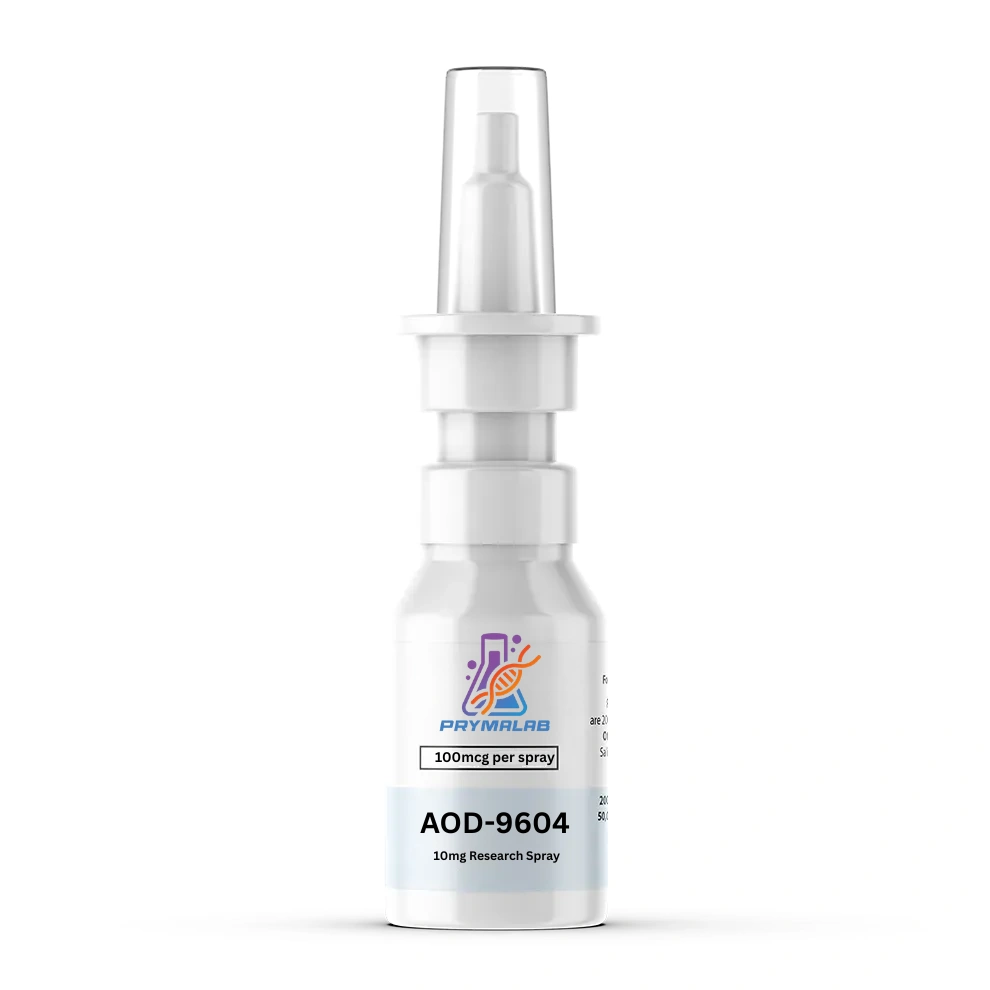
| Nasal spray | 10 mg per bottle | Bottle content alone does not state the amount delivered by one actuation. |
A larger package contains more material; it does not demonstrate greater effectiveness. Use the dosage and calculator guide for amount conversions and the quality-testing page for the supplied report’s scope.
Original research and official review
Sources for the benefit findings
- Ng et al. (2000): oral AOD9604 in obese rats.
- Metabolic Pharmaceuticals (December 17, 2004): clarification of the primary and secondary trial analyses. Sponsor report.
- Stier et al. (2013): human clinical safety program and IGF-1 measurements.
- Heffernan et al. (2001): fat oxidation in mice and GH-receptor experiments.
- Metabolic Pharmaceuticals (February 21, 2007): OPTIONS results filed with the SEC. PDF pages 6–10.
- FDA (2024): AOD9604 scientific assessment. Clinical-effectiveness section.
- Kwon and Park (2015): AOD9604 in a rabbit osteoarthritis model.
See the measured weight changes and what happened at 12 and 24 weeks.
View the results →