Published provider examples include 300 mcg daily and 250 mcg twice daily
AOD-9604 amounts need a route and a frequency beside them. The examples below are attributed to their sources; they are not a prescription for the featured research products.
| Source and context | Amount per administration | Frequency and duration |
|---|---|---|
| Refine by Tulsi Clinic's injection program | 300 mcg (0.3 mg) | Once daily; an 8–12-week course. Morning use on an empty stomach is listed.1 |
| GenOracle protocol sheet Explicit subcutaneous example | 250 mcg (0.25 mg) | Twice daily. The AOD row does not specify a course length.2 That is 500 mcg per treatment day, not 250 mcg per day. |
| MedShift / Alpha BioMed guide Provider dosing handout | 500–1,000 mcg (0.5–1 mg) | A five-days-on, two-days-off pattern; no fixed course length. The chart does not separately state administrations per treatment day.3 |
The sources show reported practices, not agreement on one optimal regimen. FDA's 2024 review found no human subcutaneous-use information and no human pharmacokinetic or bioavailability data for any route.4 Keep your own prescribed amount separate from the editable calculator examples.
A 5 mg vial at a final 2 mL gives 2.5 mg/mL
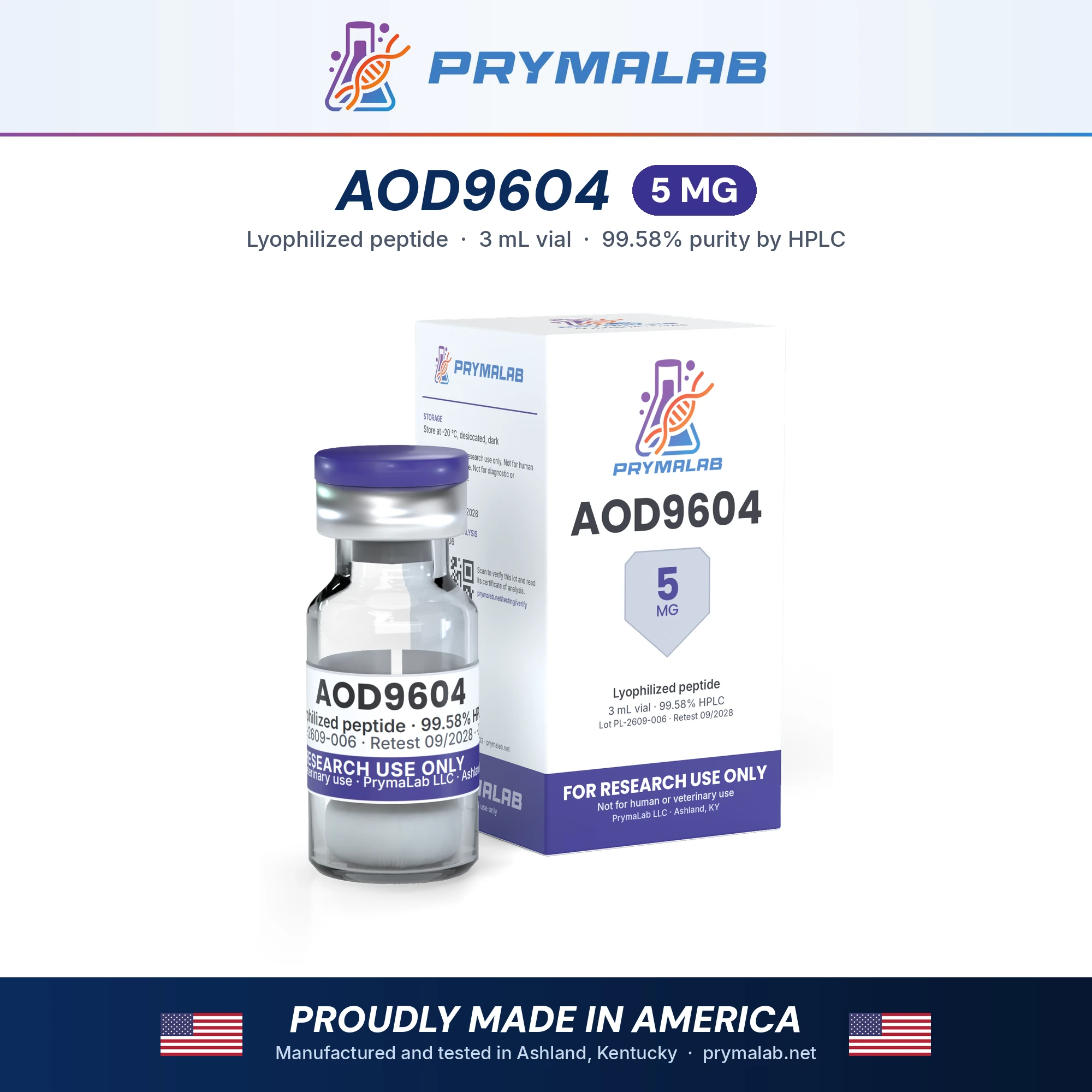
The featured vial contains dry powder. Its 5 mg label states mass, not a supplied solution volume. Concentration follows from total mass divided by the confirmed final volume.
Convert the target to mg
1 mg = 1,000 mcg.
For this example, 300 mcg = 0.3 mg.
Calculate concentration
5 mg ÷ an assumed final 2 mL = 2.5 mg/mL.
Calculate liquid volume
0.3 mg ÷ 2.5 mg/mL = 0.12 mL, a U-100 scale reading of 12.
| Example final volume | Concentration | Volume for 300 mcg | U-100 reading |
|---|---|---|---|
| 1 mL | 5 mg/mL | 0.06 mL | 6 |
| 2 mL | 2.5 mg/mL | 0.12 mL | 12 |
| 3 mL | 1.666… mg/mL | 0.18 mL | 18 |
The liquid added and the confirmed final solution volume are not automatically identical. These examples do not identify a suitable diluent, preparation method, compatibility or container capacity. Those instructions need to belong to the exact authorized formulation.
Storage and usable life are separate. The product record specifies sealed powder at −20°C, desiccated and protected from light. After reconstitution it describes 2–8°C and light protection for a laboratory-established period, without a numerical in-use duration. Do not turn that into an assumed 28-day or 30-day expiry. See the format's documented storage details.
A solution that gels, develops particles or changes unexpectedly needs assessment; a concentration calculation cannot correct a formulation problem. The COA's analytical sample concentration is a laboratory test setting, not a vial-preparation instruction.
Subcutaneous sites are in the fatty layer beneath the skin
This diagram shows general sites used for appropriate prescribed medicines. It does not establish that a research product is suitable for injection or identify an area where AOD-9604 has been proven to remove fat.
- 1 · Abdomen: below the ribs and above the hip bones.
- 2 · Outer upper thigh: the outer side of the upper leg.
- 3 · Navel exclusion: stay at least 2 inches / 5.1 cm from the belly button.
Healthy skin and rotation matter
MedlinePlus identifies the abdomen, outer upper thighs and side or back of the upper arms. It advises avoiding damaged, bruised, red or swollen skin and moving the next point at least one inch away.5
The medicine, route and delivery device still need confirmation. A general diagram cannot supply the preparation procedure, needle choice or device instructions for an unidentified formulation.
Increasing warmth, expanding redness, fever or suspected allergy belongs in the symptom and action guide.
Published timing instructions vary by provider
Morning on an empty stomach
Refine by Tulsi lists this timing for its daily example, without a specific number of minutes before food.1
Before bed or on waking
The MedShift guide specifies a fasted state and gives these alternatives.3 It does not establish that one time produces better outcomes.
Five days on, two days off
That pattern appears in the same MedShift chart.3 A weekly pause is different from a break between courses.
No cited controlled study compares morning with evening subcutaneous use or validates a specific 30-minute, 60-minute or overnight fasting interval for these products. A clinic's timing preference does not establish a biological requirement.
Write a schedule as amount per administration × administrations on each treatment day × treatment days per week. The calculators use those separate fields, so a five-day pattern is never silently converted into seven days.
Convert your entered amount into mL and a U-100 reading
Enter the target first, then total vial mass and final solution volume. The result updates immediately and keeps the concentration visible.
Nominal portions divide labeled mass by entered mass and round down. They do not account for dead space, loss, contamination, expiry or whether the calculated volume can be measured accurately.
Frequency changes the weekly amount even when the individual amount stays the same
| Example | Amount each time | Times / treatment day | Treatment days / week | Per treatment day | Per week |
|---|---|---|---|---|---|
| Clinic's once-daily example1 | 300 mcg | 1 | 7 | 0.3 mg | 2.1 mg |
| Provider's twice-daily example2 | 250 mcg | 2 | 7 | 0.5 mg | 3.5 mg |
| Five-day arithmetic example only | 300 mcg | 1 | 5 | 0.3 mg | 1.5 mg |
The first two rows calculate seven-day totals from the sources' daily schedules. The last row illustrates frequency math; it is not a newly recommended protocol or a claim that either provider published that combination.
Choose the format behind your calculation.
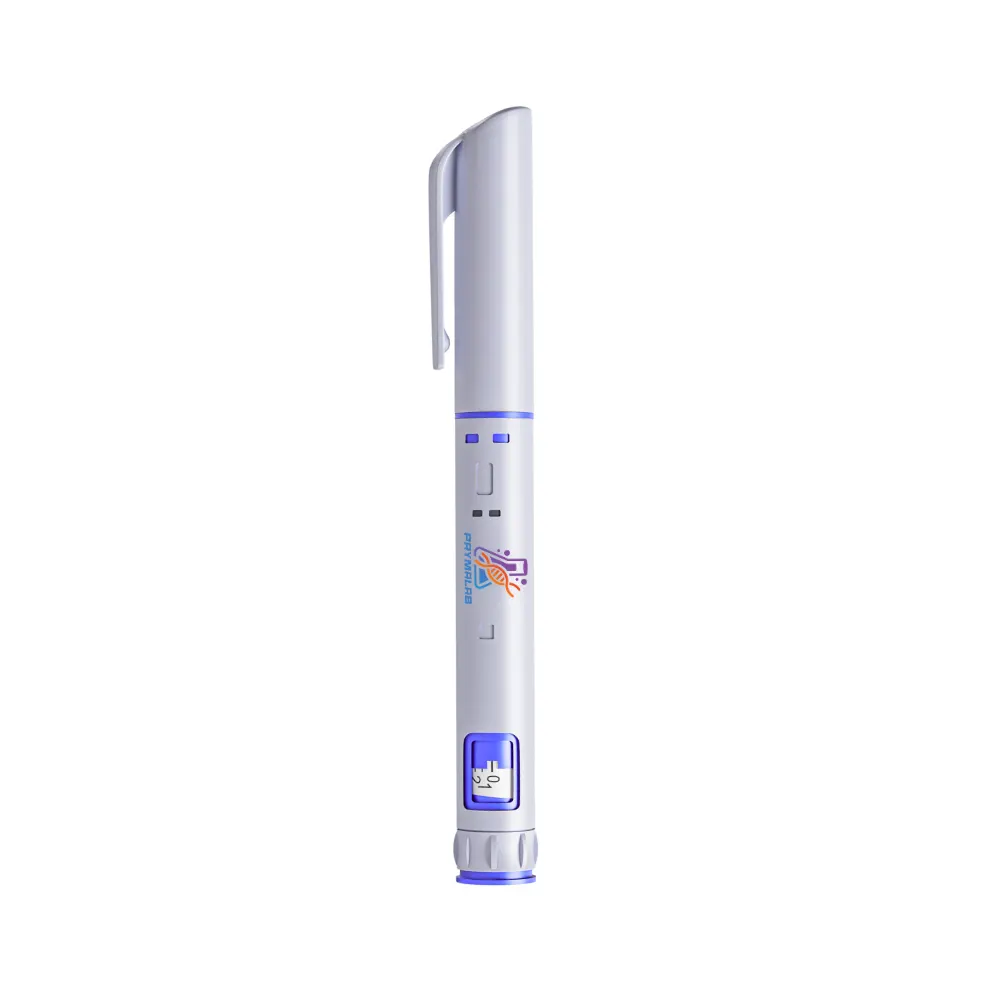
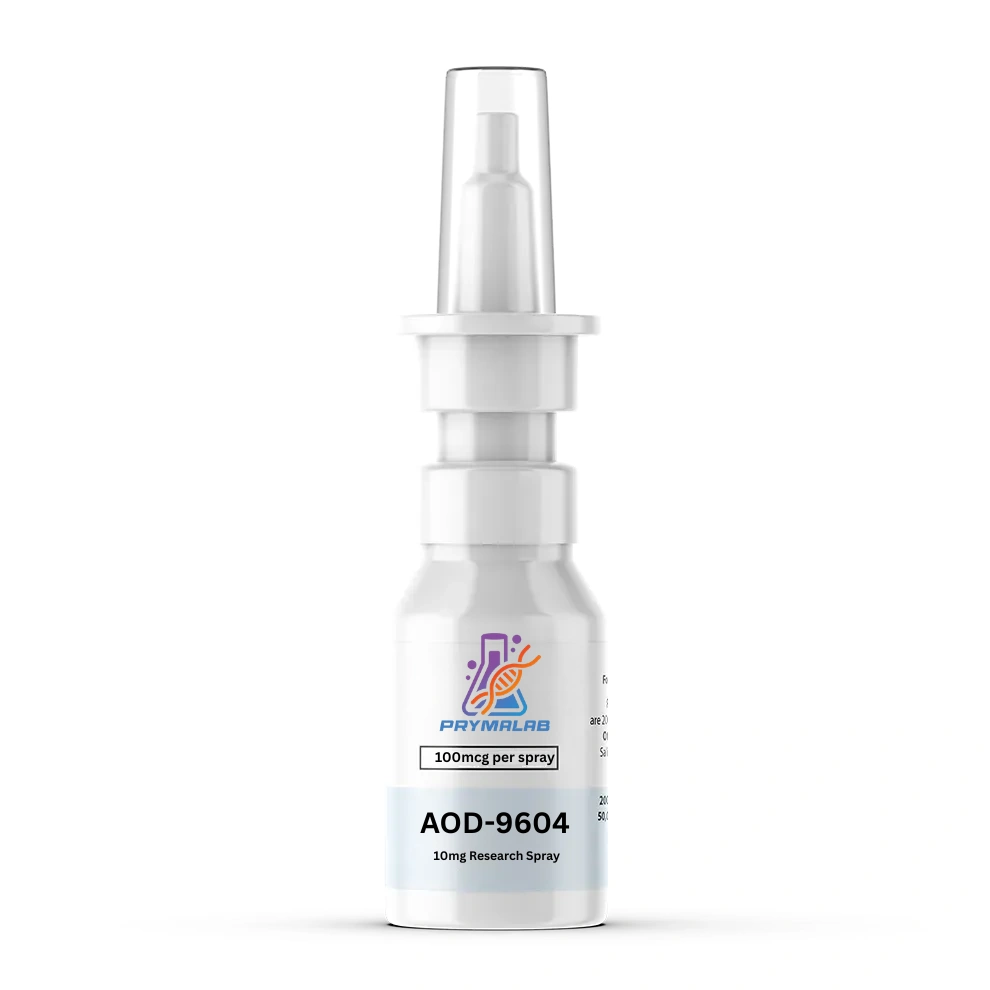
The vial is 5 mg of powder. The pen is 6 mg in 3 mL. The spray is labeled 10 mg, with output per spray unresolved.
Reported clinic courses and research durations answer different questions
8–12 weeks
This is the course stated by Refine by Tulsi.1 It is a provider's practice, not a controlled finding that this duration is effective or safer.
12 and 24 weeks
These are treatment durations in the two larger oral studies.4 They do not validate an injection cycle or a nasal schedule.
The clinic source does not specify a fixed break between courses. The provider handout's two days off each week does not establish a one-month break or a proven “reset.” A longer calendar is not evidence that an unmeasured benefit will appear later.
Use an actual planned schedule when estimating product quantity. If the amount or frequency changes, calculate each phase separately. Keep any assessment of weight or waist changes separate from the inventory calculation; the results guide explains what the human studies measured.
The pen has a known concentration; the spray needs clarification
| Format | Labeled amount | Liquid volume / concentration | Device information |
|---|---|---|---|
| Powder vial | 5 mg | Final volume must be established | A syringe reading depends on concentration and syringe scale |
| Prefilled pen | 6 mg | 3 mL · 2 mg/mL | No numerical click calibration established |
| Nasal spray | 10 mg | No exact final volume established | Front and side label claims conflict |
Calculate pen volume from 6 mg in 3 mL
At 2 mg/mL, an entered 300 mcg amount corresponds mathematically to 0.15 mL. The 0.2% w/v description expresses the same concentration; it is not a dial calibration.
The spray's two amount claims do not agree
Stated per spray.
10,000 mcg per bottle ÷ 200 claimed sprays. This is arithmetic on the label, not a measured pump output.
The listing's ≤0.1% w/v is a concentration ceiling, not an exact fill volume. Ingredients also differ between the pictured side label and current prose. The spray product details show the source discrepancy. Do not infer a reliable actuation count from either amount claim.
A verified bottle volume permits mL arithmetic only
The fields below start empty. An exact fill volume would permit calculation of concentration from the labeled 10 mg, but a separate pump calibration is still needed to translate a volume into sprays.
Prefilled storage: the current pen and spray listings specify 2–8°C, light protection and no freezing; the spray is kept upright and capped. No numerical in-use period was established. A preservative listing does not resolve the spray's ingredient conflict, prove finished-product sterility or establish an opened-container expiry.
Enter your schedule to calculate mass and whole packages
The amount and all schedule fields start blank. Results show the total mass, nominal whole-package minimums and unused labeled mass. Optional prices let you compare arithmetic costs without assuming a price.
Quantity example only: 300 mcg × 1 administration/day × 7 treatment days/week × 8 weeks = 16.8 mg. By labeled mass, that is four 5 mg vials, three 6 mg pens or two 10 mg spray bottles, with 3.2 mg, 1.2 mg or 3.2 mg nominal surplus respectively. The example does not choose an eight-week treatment or make the formats interchangeable.
Compare the actual package quantities.
Review the 5 mg vial, 6 mg pen and 10 mg spray alongside their concentration, delivery and document details.
Sources and calculation basis
Provider practices, oral research and product-label arithmetic are identified separately. Source review: November 7, 2026.
- Refine by Tulsi: peptide therapy, AOD-9604 subsection. Original clinic statement of amount, frequency, course and timing; not a controlled dosing study.
- GenOracle: peptide administration protocol. AOD row explicitly lists 250 mcg subcutaneously twice daily. Other indications and preparation instructions in the sheet are not adopted here.
- MedShift / Alpha BioMed: AOD-9604 dosing guide. Provider handout; its source-specific syringe values are not copied into this site's 5 mg vial example.
- FDA: December 4, 2024 briefing on AOD-9604-related substances. Oral study protocols, human route limitations and exposure-data gaps.
- MedlinePlus: subcutaneous injections. General anatomical sites for appropriate prescribed medicines.
Product quantities and storage: 5 mg powder vial, 6 mg / 3 mL pen and 10 mg spray and label discrepancy. The original powder-lot COA has a separate testing scope. All quantity examples use the stated mass and do not independently assay the contents.