Breathing trouble, sudden chest pressure and spreading redness need prompt action
Use the symptom to judge urgency. A reaction can involve the peptide, other ingredients, an incorrect amount, contamination or the route of administration. These cards describe actions, not measured AOD-9604 side-effect frequencies.
Throat swelling, wheezing or collapse
Trouble breathing or swallowing, swelling of the tongue or throat, or sudden collapse can indicate a serious allergic reaction. Call emergency services immediately. Do not wait for a rash or try another administration.1
Sudden chest pressure or tightness
Sudden squeezing, pressure or tightening in the chest needs emergency assessment, especially with shortness of breath, sweating, nausea or dizziness. Do not label it a normal peptide response.2
The injection area becomes hot or redness spreads
Increasing pain, warmth, swelling and expanding redness can indicate infection. Seek medical attention immediately if redness spreads rapidly or fever or chills develop.3
Diarrhea comes with dehydration or severe pain
Very little urine, marked thirst, dizziness, frequent vomiting, severe abdominal pain or blood in the stool need prompt medical advice. Diarrhea lasting more than two days also warrants review.4
Nose irritation or bleeding continues
Pause an irritating nasal product and seek advice for repeated bleeding. Get emergency care if a nosebleed does not stop after 20 minutes. Nosebleeds can have several causes; they do not establish which ingredient caused a reaction.5
Headache, dizziness or an unusual mood change persists
Record when it began and get clinical advice before another administration. Headache and euphoria were reported in early studies using other routes.6 A symptom is not proof of effectiveness or a reason to increase the amount.
The published events come from intravenous or oral studies
The original safety report summarized six controlled studies. Their formulations, routes and participants differ from the featured powder, pen and nasal spray. Keep that context beside an adverse event or a percentage.
| Study context | What was reported | How to interpret it |
|---|---|---|
| METAOD002 Single intravenous doses | One severe chest-tightness event and five reports of euphoria were considered possibly related to AOD-9604. No euphoria was reported with placebo.7 | This small, short IV study does not establish the rate with a subcutaneous or nasal preparation. |
| METAOD003 Single oral doses | A serious diarrhea event after 54 mg was judged possibly related. Pneumonia at the same dose was judged unrelated.6 | An event occurring during a study and an event attributed to treatment are different findings. |
| METAOD004 Seven-day oral study | The 54 mg group had more headache, diarrhea and flatulence than lower-dose groups or placebo.6 | These high oral amounts cannot be converted directly into injection or nasal amounts. |
| METAOD005 Twelve-week oral study | 88.9% of participants across all groups reported at least one adverse event; the distribution was similar in active and placebo groups.6 | That overall figure includes background events and placebo recipients. It is not an AOD-caused side-effect rate. |
Serious events in the 12-week study included cancers and a lipoma. Investigators considered the events unrelated to treatment, while FDA found the reports too sparse to assess relatedness adequately.7 These records establish neither that AOD-9604 caused cancer nor that long-term cancer risk has been excluded.
The detailed results matter more than a blanket “no side effects” summary. The original paper's results include a possibly related serious diarrhea event even though its broad concluding language is reassuring. The results guide separately addresses weight outcomes; tolerability and effectiveness are different questions.
FDA's current listing retains safety concerns for AOD-9604
AOD-9604 appears in the section for bulk substances nominated but withdrawn. FDA identifies concerns about immune responses, peptide-related impurities and characterization, and says that serious adverse events may be associated with AOD-9604 although causality is unclear.8
A withdrawn nomination is not a clearance
The listing describes the nomination and safety-information status. It should not be presented as a safety endorsement or simplified into a claim that every product has the same legal status.
Compounding does not create FDA approval
FDA does not review compounded drugs for safety, effectiveness and quality before marketing. Incorrect strength or contamination can cause harm.9
The 2024 FDA assessment states that neither AOD-9604 free base nor its acetate is a component of an FDA-approved drug. It found limited clinical safety information, no human pharmacokinetic/bioavailability information and no human information for the proposed subcutaneous use.7 A store listing, clinic protocol or research-use label does not fill those gaps.
Powder, prefilled pen and nasal spray have different unanswered questions
| Format | Known information | What remains separate |
|---|---|---|
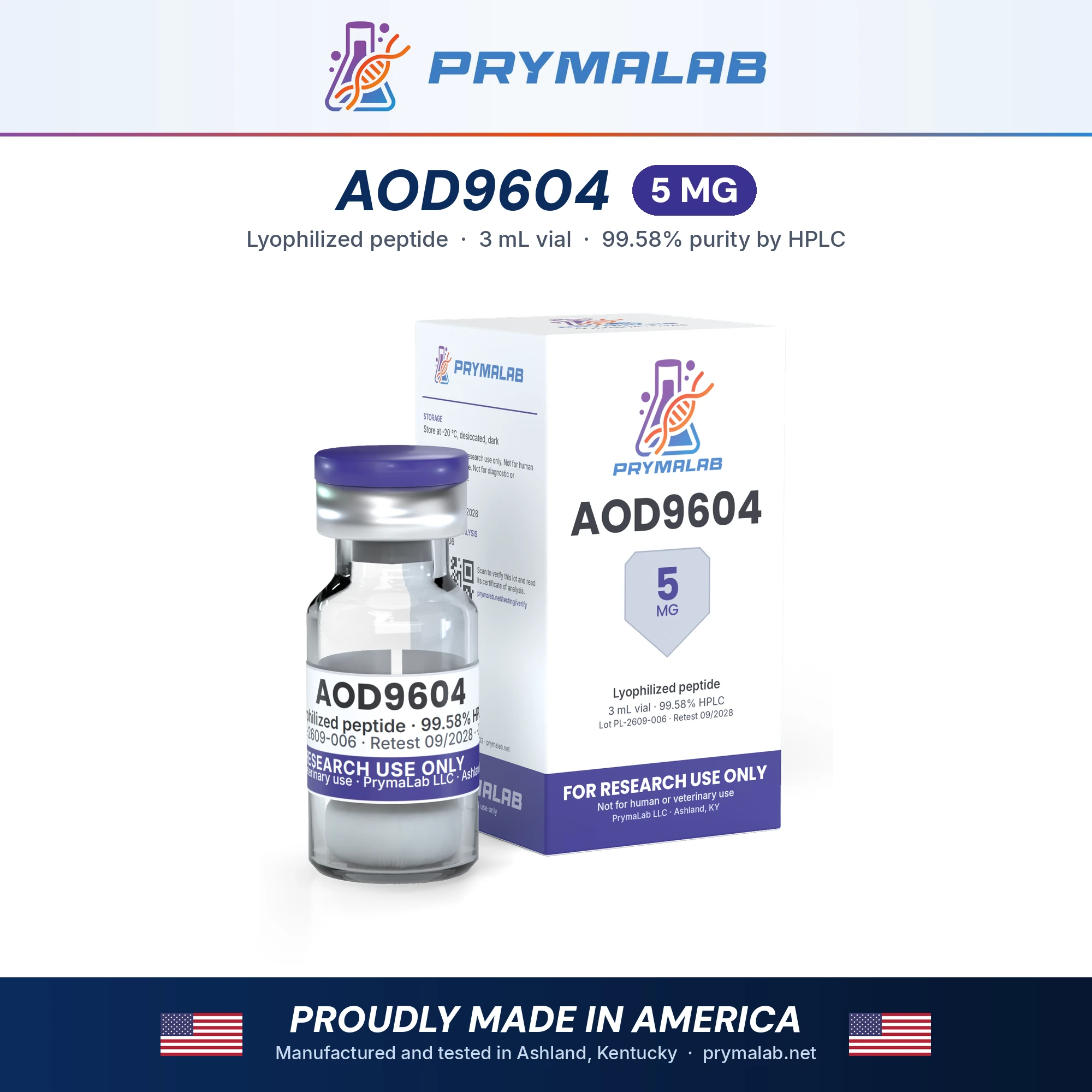
| 5 mg powder vial | The supplied report covers a sampled powder lot. | Final formulation, concentration, handling, usable period and suitability for a clinical route. |
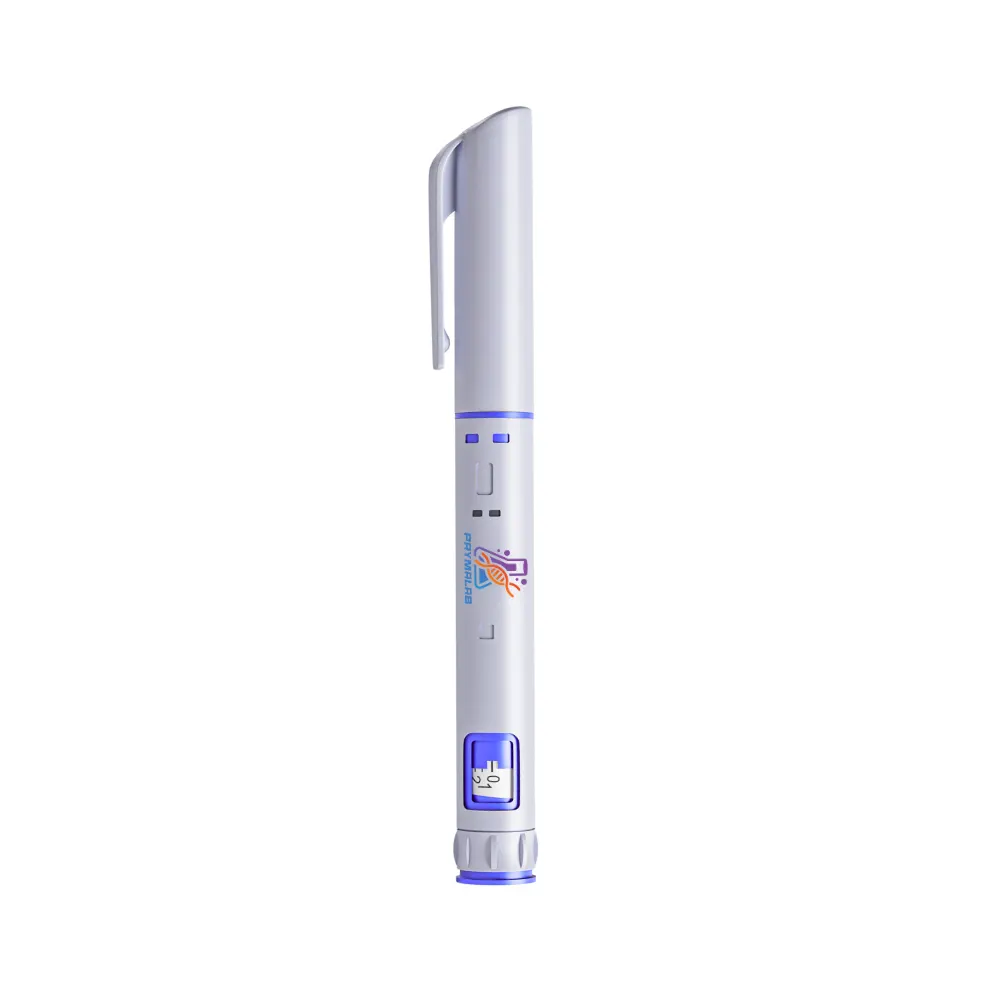
| 6 mg / 3 mL pen | The stated concentration is 2 mg/mL; the listing names 0.9% benzyl alcohol. | Finished-product testing, individual ingredient sensitivity and a verified amount per device setting. |
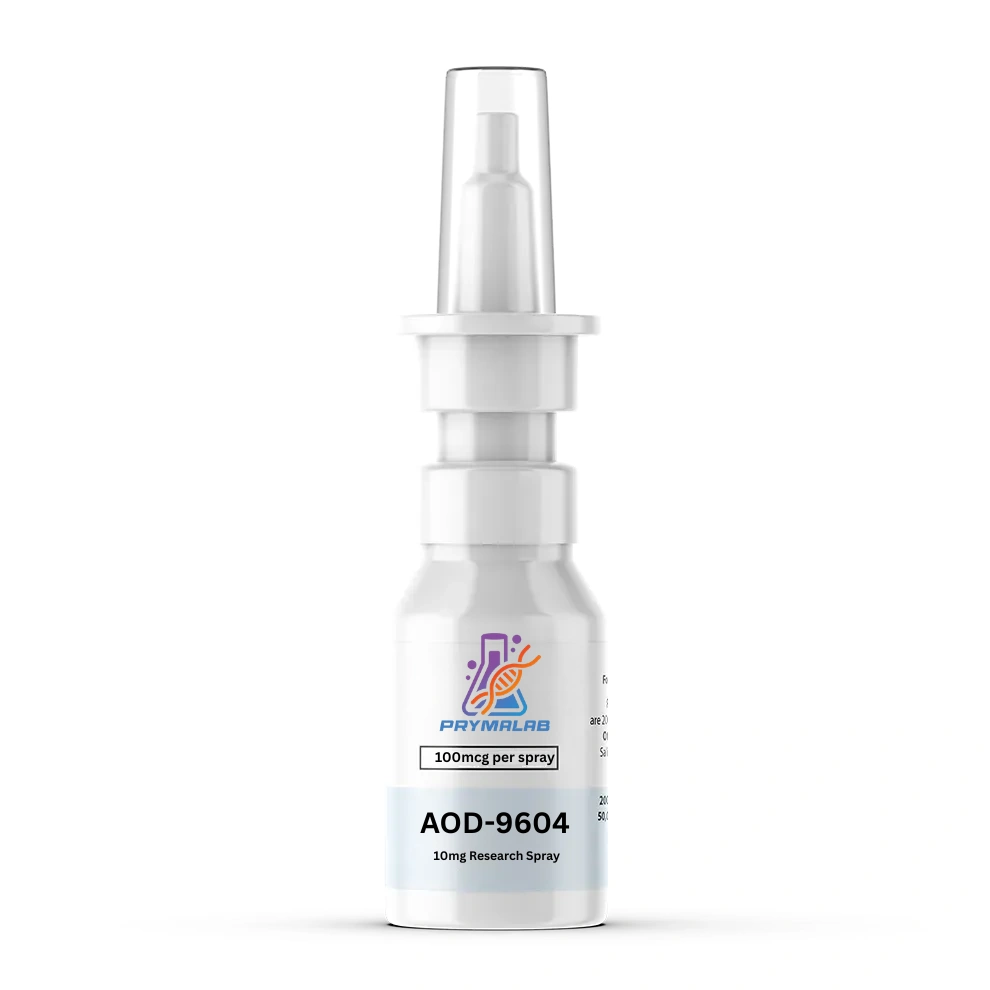
| 10 mg nasal spray | The bottle's total mass claim is available. | Per-spray output and ingredient statements conflict; no exact final volume or measured pump calibration was established. |
The spray front says 100 mcg per spray. Its side says 10,000 mcg per bottle and 200 sprays, implying 50 mcg per spray if those two claims are combined mathematically. The side label names saline and methylparaben; current prose names bacteriostatic water and benzyl alcohol. Those differences need resolution from the responsible source, not an average of the two numbers.
A nosebleed or persistent nasal irritation should be assessed as a symptom. There is no established incidence table for this AOD-9604 spray in the reviewed human evidence. Likewise, ordinary injection-site irritation cannot be described as a known “common AOD side effect” without appropriate route-specific data.
Reported laboratory findings are narrower than a zero-risk promise
The 2013 report found no significant IGF-1 changes and no consistent adverse glucose findings in the studied oral and IV settings.6 That is a finding from particular studies, not a guarantee for every person, amount, route or formulation.
AOD-9604 should not inherit every side effect associated with full-length growth hormone merely because it is derived from part of that molecule. The reverse shortcut also fails: different activity does not prove freedom from metabolic, allergic or long-term risks.
If glucose control is already a concern, bring current readings, medicines and the proposed fasting schedule to the treating clinician. A provider's empty-stomach instruction does not justify changing established diabetes treatment. The reviewed sources do not provide a complete interaction list or a validated monitoring schedule for these research products.
Pregnancy, childhood, allergy and cancer history cannot be covered by an adult protocol
Pregnancy and breastfeeding
Safety in pregnancy or breastfeeding is not established by the cited adult studies. FDA also found no nonclinical developmental or reproductive studies in its evaluation.7 An adult weight-management schedule does not resolve those questions.
Children and adolescents
The cited studies involved adults. Their quantities cannot supply a pediatric dose or establish safety during growth and development.
Known allergy or a previous reaction
Keep the complete ingredient list and describe prior reactions to the clinician. This is especially relevant when the spray's label and current prose name different preservatives. Do not assume that changing from vial to pen or spray removes the cause.
Active or previous cancer
The cancer reports and missing long-term information need individual discussion with the treating team. Neither an investigator's unrelated-event assessment nor a normal laboratory result establishes safety after cancer.
Also disclose existing heart disease, recurrent nosebleeds, recent nasal surgery, relevant liver or kidney disease and all medicines or supplements. The goal is to identify factors that affect symptom assessment and formulation choice, not to imply that a complete AOD-specific contraindication list has been established.
99.58% reported purity is one result from a sampled powder lot
Reported for the 5 mg powder lot
EU/mg in the supplied report
The certificate states a 14-day test
The original certificate PL-26-00006 identifies powder lot PL-2609-006, reports two sampled units from a lot of 250 and describes in-house testing. These are reported results, not an independent verification performed by this website.
Purity is not an assay of 5 mg in every vial. Reported powder-lot sterility and endotoxin results also do not carry over automatically to subsequent mixing, repeated handling, a finished pen or a spray. The quality guide keeps those scopes separate.
A clear-looking solution or a preservative listing cannot establish an opened-container expiry. Damaged seals, particles, unclear labels or uncertain storage history are reasons to stop and resolve the product question. Avoid changing diluent, adding acid or combining remnants to compensate for an uncertain preparation.
Compare the formats with their actual records.
Read the vial, pen and spray specifications alongside the original powder-lot report and the unresolved spray information.
Milligrams, milliliters and device readings are different quantities
300 mcg equals 0.3 mg
Confusing mcg with mg creates a 1,000-fold error. State both the number and its unit; an unlabeled “300” is not enough information.
The same amount can require a different volume
For a 300 mcg mathematical target, a 5 mg vial at a final 2 mL gives 0.12 mL. The 6 mg / 3 mL pen gives 0.15 mL. Equal target mass does not mean equal liquid volume.
The vial calculator shows concentration and mL beside the U-100 reading. Its unit selector preserves the entered mass. The pen converter does not invent clicks, and the spray converter leaves the unknown final volume blank and returns no actuation count.
Correct arithmetic still cannot establish a suitable dose, reliable pump output or a measurable device increment. If the instructions cannot be expressed unambiguously in mass and volume, obtain clarification before interpreting a syringe mark or numbered setting.
Record the formulation, amount and symptom timeline
Identify the preparation
Keep the package, lot number, ingredient list, product format and any available certificate. Note the route and relevant storage history.
Write the quantity clearly
Record mg or mcg, concentration and mL if known. A pen setting or claimed spray count alone is insufficient without a reliable calibration.
Describe what changed
Note administration time, symptom onset, progression, other medicines and any care received. Medical assessment takes priority over collecting documentation.
Consumers and clinicians in the United States can report serious suspected product problems through FDA MedWatch.10 Reporting does not replace medical care, and a report does not require proving the cause yourself.
Sources and their scope
General symptom guidance, observed trial events, official assessments and product documents are identified separately. Source review: November 7, 2026.
- MedlinePlus: anaphylaxis. Emergency symptoms and action.
- MedlinePlus: chest pain. Symptoms requiring emergency assessment.
- CDC: cellulitis. Infection symptoms and immediate-care indications.
- NIDDK: symptoms and causes of diarrhea. Dehydration and other signs that warrant prompt medical review.
- MedlinePlus: nosebleed. General nasal-symptom guidance, not an AOD-specific incidence study.
- Stier, Vos and Kenley, 2013: Safety and Tolerability of the Hexadecapeptide AOD9604 in Humans. Original sponsor-associated report of six oral/IV trials; detailed results and broad conclusions require separate reading.
- FDA: December 4, 2024 AOD-9604 briefing. Clinical-event review, causality limitations, nonclinical gaps and formulation concerns.
- FDA: certain bulk substances that may present significant safety risks. Current AOD-9604 entry under withdrawn nominations.
- FDA: understanding the risks of compounded drugs.
- FDA MedWatch: reporting serious problems.
Product and test details: format comparison and source-label discrepancies; original powder-lot certificate and testing scope. Product documentation is not a clinical safety trial.